
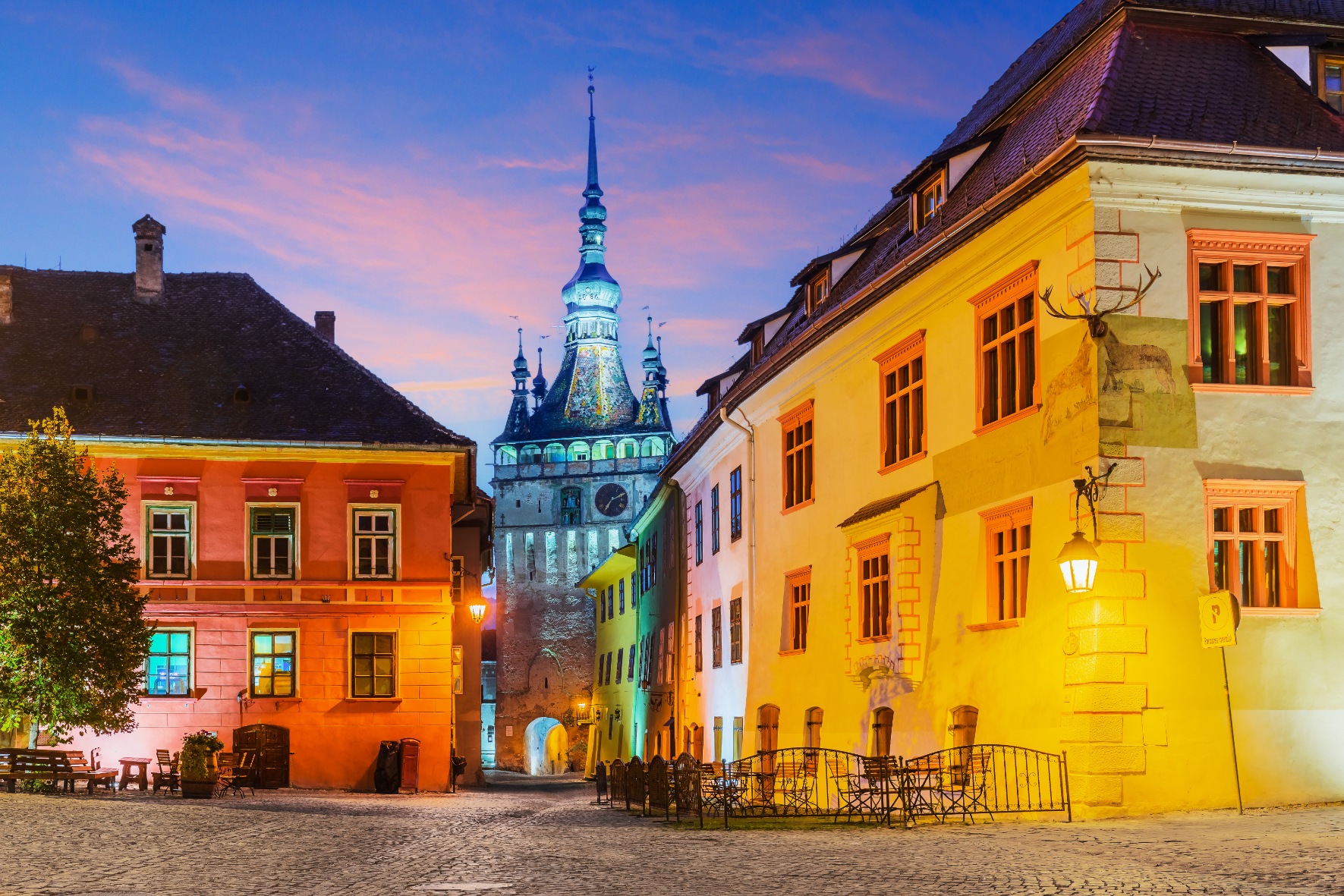
Sighișoara is a medieval town located in the heart of Romania, in Mureș County, known for its historical beauty and fairy-tale charm. Part of the UNESCO World Heritage, Sighișoara is one of the few still inhabited medieval citadels in Europe. The town attracts tourists from all over the world thanks to its well-preserved architecture, cobblestone streets, and authentic atmosphere.
1. How to Get to Sighișoara
- By car: Sighișoara is located approximately 120 km from Sibiu, 150 km from Brașov, and 300 km from Bucharest. The main roads leading to Sighișoara are the DN13 (E60), connecting Brașov to Târgu Mureș.
- By train: Sighișoara is well-connected by the railway network, being situated on the main line between Bucharest and Cluj-Napoca. Direct trains run daily from major cities such as Brașov, Cluj-Napoca, and Bucharest.
- By plane: The nearest international airport is Târgu Mureș Airport (about 60 km away) or Sibiu International Airport (about 100 km away). From the airport, you can rent a car or use public transport.
2. Tourist Attractions and Places to Visit
- Sighișoara Medieval Citadel: The heart of the town, the medieval citadel, is one of the best-preserved medieval fortresses in Europe. Walking through its narrow, cobblestone streets, with colorful buildings and tiled roofs, will transport you to another era. Key attractions within the citadel include the Clock Tower, the Covered Staircase, and Vlad Dracul House.
- The Clock Tower: The symbol of the town, the Clock Tower, is the tallest tower in Sighișoara, standing at 64 meters high. Built in the 14th century, the tower now houses a history museum and offers a spectacular view of the town and its surroundings.
- Vlad Dracul House: Located near the Clock Tower, this house is said to be the birthplace of Vlad Țepeș (Dracula), the ruler of Wallachia. Today, the house hosts a themed restaurant.
- The Church on the Hill: This Gothic church, built in the 14th century, is one of the largest religious buildings in Transylvania. The church is located on a hill, offering an impressive view of the citadel.
- The Covered Staircase: A wooden-covered structure built in the 17th century, connecting the town to the Church on the Hill and the school in the citadel. Originally, the staircase had 300 steps, but only 175 remain today.
- The Citadel Square: The center of the citadel is Citadel Square, a lively place surrounded by old houses, many of which have been transformed into restaurants, cafes, and art galleries. Cultural events, such as the Medieval Festival, are also held here.
3. Recommended Activities
- Sighișoara Medieval Festival: Usually held in July, the Medieval Festival brings the citadel to life with parades, theater performances, medieval music and dances, artisan fairs, and knight competitions.
- Guided Tours: You can opt for a guided tour of the citadel to learn more about the town's fascinating history. Tours are available in several languages and cover the main attractions in Sighișoara.
- Walks and Hiking: Sighișoara is surrounded by hills and natural landscapes of rare beauty. If you enjoy hiking, you can explore the town's surroundings, where you'll discover picturesque villages and peaceful nature.
- Visit the Fortified Churches: Around Sighișoara, there are numerous Saxon fortified churches, some of which are UNESCO World Heritage Sites, like Biertan and Viscri. These villages offer a unique glimpse into Saxon culture and medieval Transylvanian history.
4. Where to Eat in Sighișoara
- Casa Vlad Dracul Restaurant: A historic place with a traditional Romanian and Transylvanian menu. It offers dishes that combine Saxon and Hungarian influences with local cuisine.
- Restaurant Casa Georgius Krauss: Located in a 17th-century building, this restaurant is known for its gourmet dishes and refined historical atmosphere.
- Café Martini & Gelateria: If you're looking for a good coffee or a delicious dessert, this café in the citadel is the perfect spot.
5. Accommodation in Sighișoara
There are numerous accommodation options for all tastes and budgets, with recommendations including: Hotel-Apartament Vila Veve, Pensiunea Nobil Medieval, Hotel Rex, Pensiunea Baron.
6. Tips for Tourists
- Comfortable Footwear: The cobblestone streets and steep hills of the citadel make comfortable shoes essential for exploring the town.
- Best Time to Visit: Sighișoara is beautiful year-round, but summer, especially during the Medieval Festival, is particularly lively. Spring and autumn are ideal if you prefer a quieter atmosphere.
- Respect the History: The citadel is inhabited, and many buildings are still used by locals, so it's important to respect the historical sites and pay attention to tourist signs.
7. When to Visit Sighișoara
Sighișoara is a great destination year-round. In the summer, the town is full of life with events and festivals, while in winter, the snow-covered citadel offers a fairy-tale atmosphere. The fall and spring months are ideal for walks and explorations when the town is less crowded.
Sighișoara is truly a gem of Transylvania, a place where history comes alive in every corner and where you can experience an authentic medieval atmosphere in a unique setting.