
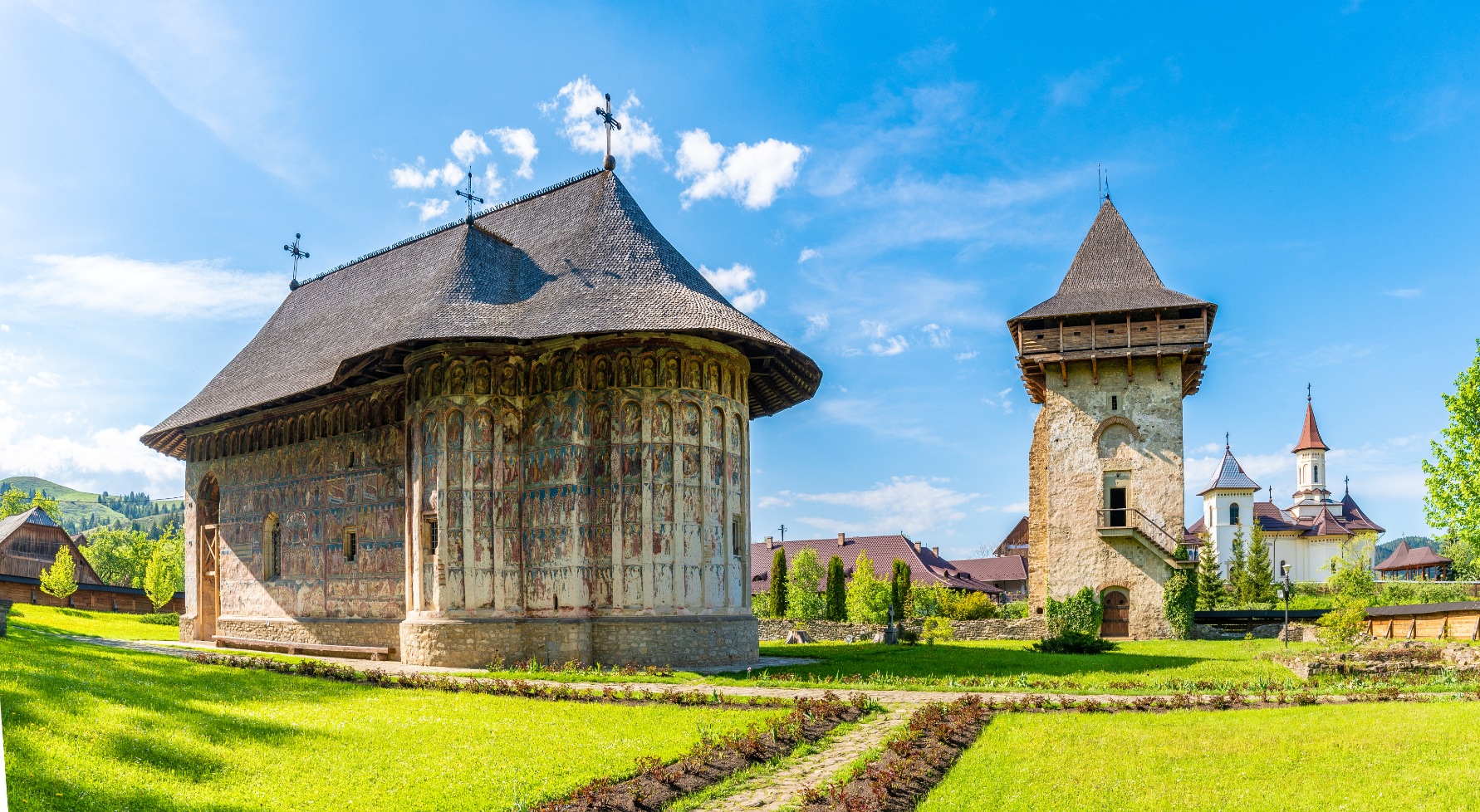
Bucovina, located in the north of Romania, is a remarkable region known for its picturesque landscapes, historical monasteries, and authentic folk traditions. This area offers a unique combination of natural and cultural beauty, attracting tourists from all over the world.
Tourist Attractions
1. The Monasteries of Bucovina
Bucovina is renowned for its painted monasteries, included in the UNESCO World Heritage List. The most notable include:
- Voroneț Monastery: Dubbed the "Sistine Chapel of the East" for its vibrant blue frescoes, known as the "Voroneț Blue."
- Moldovița Monastery: Famous for its well-preserved exterior frescoes and impressive interior paintings.
- Sucevița Monastery: Appreciated for its frescoes depicting the "Ladder of Virtues" and the "Last Judgment."
- Humor Monastery: Notable for its red-hued paintings and harmonious architectural complex.
2. Suceava Fortress
Located in the city of Suceava, this fortress was an important medieval stronghold during the reign of Stephen the Great. The fortress offers a glimpse into Moldova's history and provides a spectacular view of the city and its surroundings.
3. Bucovina Village Museum
This open-air museum in Suceava showcases traditional houses and wooden structures from various periods and regions of Bucovina. Visitors can explore the rural life of the past and participate in traditional craft workshops.
4. Călimani National Park
For nature lovers, Călimani National Park offers spectacular mountain landscapes, hiking trails, and a rich diversity of flora and fauna. The Călimani Volcano and Lake Iezer are remarkable natural attractions within this park.
5. Cacica Salt Mine
Cacica Salt Mine is one of the oldest salt mines in Romania, offering tourists the chance to explore the salt mines and benefit from the therapeutic salty air. The mine also includes an underground church carved out of salt.
Recommended Activities
1. Hiking and Mountain Trails
Bucovina offers numerous hiking trails through the Carpathian Mountains and wooded hills. The trails in Călimani National Park and Piatra Neamț are popular among hikers.
2. Visiting Traditional Villages
Explore Bucovina’s authentic villages, such as Ciocănești, known for its painted houses, and Marginea, renowned for its black pottery. These villages offer a glimpse into rural life and traditional crafts.
3. Participating in Local Festivals
Bucovina hosts numerous traditional festivals throughout the year, including the Painted Eggs Festival in Ciocănești and the Medieval Festival in Suceava. These events provide an opportunity to experience local culture and folk traditions.
4. Sleigh or Carriage Rides
In winter, horse-drawn sleigh rides through snowy landscapes are an unforgettable experience. In summer, the same routes can be explored by carriage, offering a scenic journey through nature.
Local Cuisine
Bucovina is known for its traditional cuisine, which includes delicious dishes such as:
- Ciorbă de burtă: A hearty tripe soup served with sour cream and vinegar.
- Sarmale: Cabbage leaves stuffed with pork and rice, slowly cooked in a tomato sauce.
- Mămăligă cu brânză și smântână: Polenta served with sheep cheese and sour cream.
- Pască and cozonac: Traditional Easter cakes filled with sweet cheese and raisins or walnut and cocoa.
Bucovina is a fascinating tourist destination that offers a unique blend of impressive natural landscapes, historical monuments, and authentic traditions. Whether you are passionate about history, nature, or culture, Bucovina has something to offer every visitor. Plan your next vacation in this wonderful region and discover all the treasures it has to offer!
Accommodation Recommendations in Bucovina: Pensiunea Floare de Crin in Pojorâta, Pensiunea Anastasia in Gura Humorului, Pensiunea Boculeț in Gura Humorului, Pensiunea Casa Vero in Vama, Casa Petru Moroșan in Mănăstirea Humorului, Casa Sofia in Dorna Candrenilor, or Hanul lui Mujdei in Vatra Dornei.